
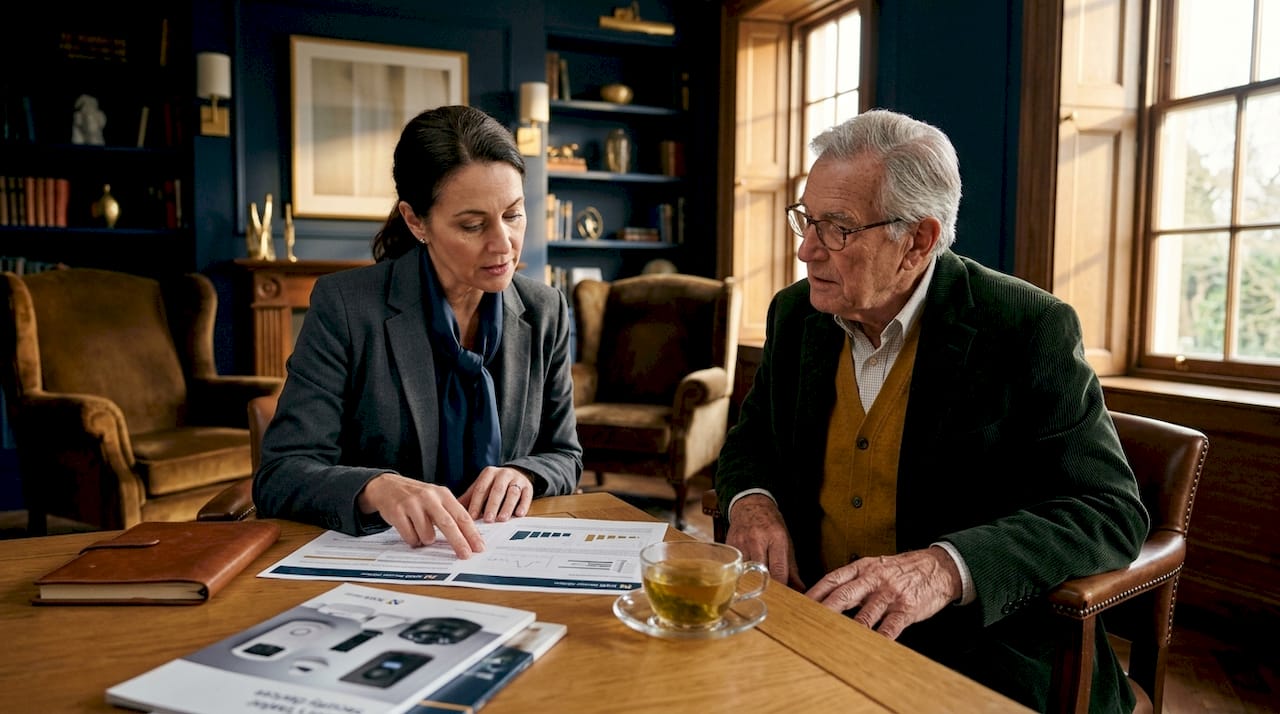
Bespoke security solutions are customised safety systems designed specifically around the unique protection needs of individuals and families. Unlike generic off-the-shelf packages, they begin with a structured Threat and Vulnerability Assessment (TVA), the recognised industry term for site-specific risk analysis, and build outward from there. Frameworks such as ISO 31000 for risk management and ISO 9001:2015/ISO 45001 for operational safety compliance set the professional standard for this work. The result is a personalised safety system that addresses your actual risks rather than a statistical average of everyone else’s. For high-net-worth families, that difference is not a luxury. It is the point.
What are bespoke security solutions and why do they start with a TVA?
A Threat and Vulnerability Assessment is the foundation of any credible personalised security plan. It identifies the specific risks facing an individual, a household, or a property, rather than applying a one-size template. Intelligence-led security uses site-specific risk analysis and real-time data to prevent breaches before they occur, shifting the entire security posture from reactive to proactive.
The TVA process typically works through four stages.
- Identify assets and people at risk. This covers physical property, digital assets, family members, and daily routines.
- Map threat sources. These range from opportunistic burglary and targeted theft to reputational attacks and digital intrusion.
- Assess vulnerability. Each threat is weighed against current defences to find gaps.
- Prioritise countermeasures. Resources go to the highest-probability, highest-impact risks first.
For a family with significant assets, the threat picture is genuinely different from a standard household. Travel patterns, public profiles, and the presence of staff all create exposure points that a generic alarm system simply does not account for.
Pro Tip: Commission a TVA before purchasing any security technology. Buying hardware without a risk assessment is like insuring a car before you know how you drive.
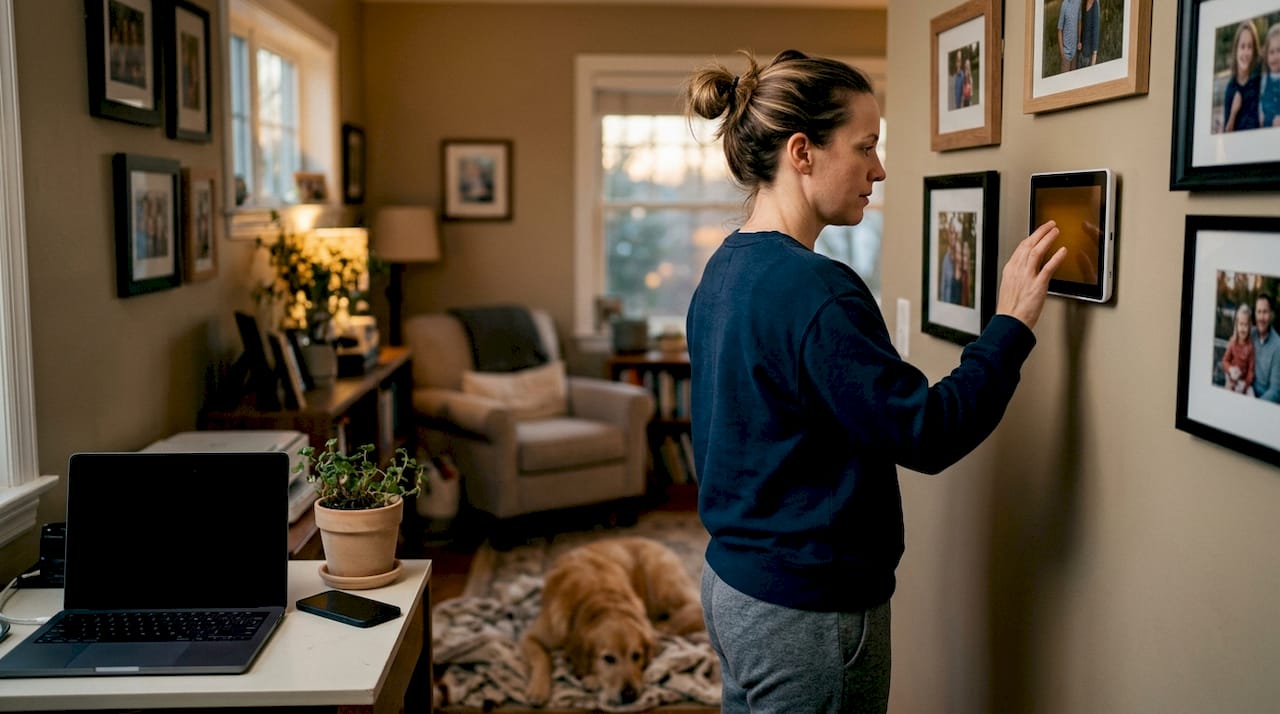
The TVA outcome directly shapes which technologies, monitoring services, and behavioural protocols get built into the final plan. This is why tailored security services that start with assessment consistently outperform those that start with a product catalogue.
What technologies go into a tailored security system?
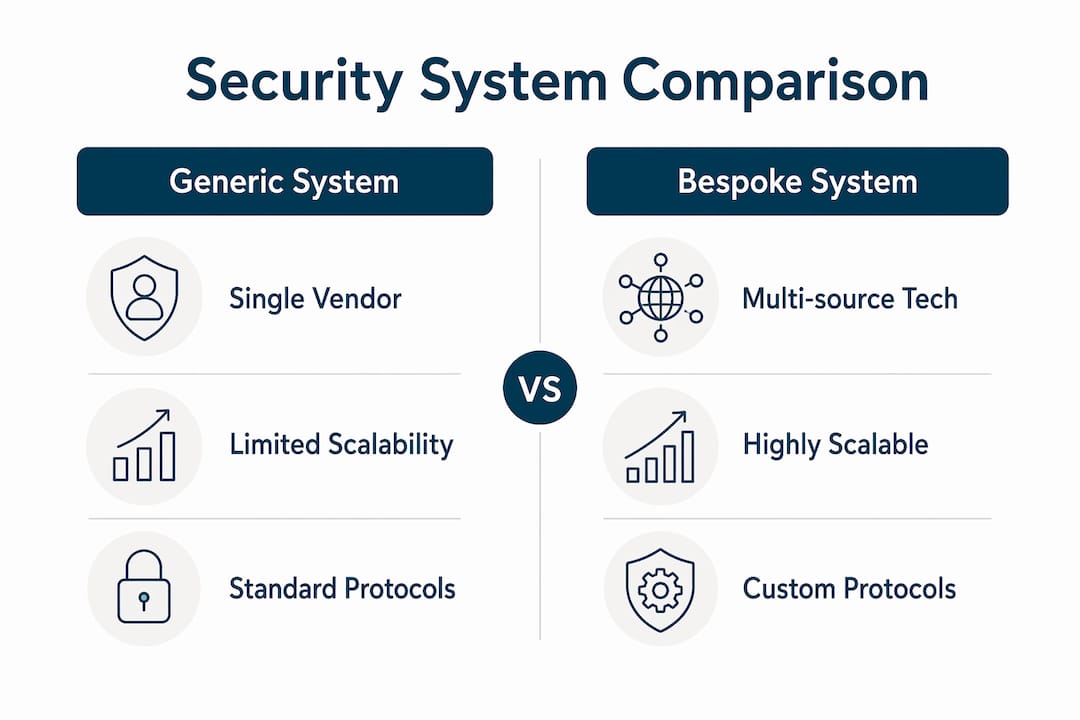
Bespoke security systems integrate multiple technologies, including CCTV, facial recognition, and motion sensors, into unified and upgradable platforms. That integration is the key differentiator. Generic closed-loop systems lock you into one manufacturer’s ecosystem. A bespoke setup pulls the best components together and lets them communicate.
The core technologies typically available include:
- CCTV with facial recognition. Cameras identify known individuals and flag unrecognised faces, reducing the need for constant manual monitoring.
- Motion sensors and infrared warning zones. Infrared scanners can monitor a 9-metre radius and trigger tiered alerts before an intruder reaches a building.
- App-based verification. Before emergency services are dispatched, an app-based step confirms the alert is genuine, cutting false alarms significantly.
- Alarm systems with test modes. Selective dispatch settings mean routine maintenance does not trigger a full response.
- Access control and perimeter monitoring. Gate systems, intercoms, and vehicle recognition cameras control who enters a property.
| Feature | Generic system | Bespoke system |
|---|---|---|
| Technology integration | Single manufacturer | Multi-source, unified |
| Scalability | Fixed at installation | Upgradable over time |
| False alarm management | Limited | App-verified, selective dispatch |
| Threat-specific configuration | No | Yes, TVA-driven |
Scalability matters more than most families realise at the outset. Circumstances change. A property expands, a family member’s public profile grows, or a new risk emerges. A bespoke surveillance solution built on an open architecture adapts without requiring a full replacement.
Pro Tip: Ask any security provider whether their system uses open or closed architecture. A closed system that cannot integrate new components will be obsolete within three to five years.
How do personal safety action plans strengthen security?
Physical technology alone does not create a safe environment. Behavioural safety strategies through Personal Safety Action Plans (PSAPs) shift individuals from passive compliance with rules to active ownership of their own safety. This distinction matters enormously in practice.
A PSAP is a documented, personalised plan that identifies an individual’s specific risk exposures and assigns concrete actions to manage them. PSAP software supports real-time collaboration, action tracking, and compliance with occupational health and safety standards. For a family, this might mean agreed protocols for travel, communication check-ins, or responses to unexpected contact from strangers.
The behavioural layer addresses gaps that technology cannot fill:
- Routine variation. Predictable patterns make individuals easier to target. A PSAP builds deliberate variation into daily routines.
- Staff and household protocols. Domestic staff, drivers, and personal assistants need clear, practised procedures for security incidents.
- Children’s safety awareness. Age-appropriate guidance gives younger family members the knowledge to act correctly without creating anxiety.
- Digital behaviour. Social media habits, location sharing, and device security all feed into the overall risk picture.
Most high-end personal safety tools fail because they rely on reactive panic buttons. Context-aware alert systems that use route data, biometrics, or motion to trigger silent escalation are far more effective when manual activation is not possible. A well-designed PSAP integrates these automatic triggers into the family’s daily life without disruption.
How do bespoke systems handle insider threats?
Insider threats are the risk that generic security products handle worst. An insider, whether a member of staff, a contractor, or someone with legitimate access, already knows where the cameras are, what the alarm codes are, and when the property is unoccupied. A standard off-the-shelf system offers almost no protection against this.
Bespoke security designs prioritise resistance to tampering and insider threats from the outset. Customised technical countermeasures include compartmentalised access codes, audit trails for system interactions, and physical tamper-detection on hardware. No single individual holds complete knowledge of the system’s architecture.
| Insider threat scenario | Generic system response | Bespoke system response |
|---|---|---|
| Staff member disables camera | No alert triggered | Tamper detection alerts monitoring centre |
| Alarm code shared externally | No audit trail | Code-specific access logs reviewed |
| Contractor maps property layout | No countermeasure | Compartmentalised access limits exposure |
Open Source Intelligence (OSINT) integration adds a further layer. OSINT monitors publicly available information, social media, forums, and news sources, to identify whether an individual is being researched or targeted before any physical approach occurs. This anticipatory capability is what separates high-level personalised security from standard surveillance.
Pro Tip: Conduct a staff access audit every six months. Review who holds alarm codes, key fobs, and system login credentials. Remove access immediately when roles change.
The combination of technical countermeasures and OSINT monitoring means a bespoke system is not simply harder to defeat. It actively gathers intelligence on potential threats before they materialise.
Key takeaways
Bespoke security solutions outperform generic alternatives because they are built from a specific risk assessment, integrate multiple technologies into a single upgradable system, and combine physical, behavioural, and intelligence-led measures.
| Point | Details |
|---|---|
| Start with a TVA | A Threat and Vulnerability Assessment identifies your actual risks before any technology is purchased. |
| Integrate, do not isolate | Multi-source systems combining CCTV, motion sensors, and app alerts outperform single-manufacturer setups. |
| Add a behavioural layer | Personal Safety Action Plans turn passive security into active, practised daily habits. |
| Design against insider threats | Compartmentalised access and OSINT monitoring protect against risks that generic systems ignore entirely. |
| Build for change | Open-architecture systems adapt as your circumstances, assets, and risk profile evolve. |
Why I think most families underestimate their security exposure
Alex Goldstein
The families I speak with most often arrive at a security conversation after something has already gone wrong. A car followed home. A social media post that revealed too much. A member of staff who turned out to be less trustworthy than assumed. By that point, the conversation is reactive, and reactive security is always more expensive and more disruptive than proactive planning.
What strikes me consistently is how much of the real risk is invisible until someone maps it properly. A family might have excellent physical security at their primary residence and almost none at a holiday property, a child’s school run, or a business address. The TVA process makes that patchwork visible. Without it, you are protecting the parts you can see and leaving the parts you cannot see entirely exposed.
The other thing most people overlook is the behavioural dimension. Technology is only as good as the habits surrounding it. I have seen sophisticated systems rendered useless because alarm codes were shared casually, or because a family member posted their location in real time. The personalised safety approach that combines technology with genuine behavioural change is the one that actually holds under pressure.
Security is not a product you buy once. It is a practice you maintain. The families who understand that are the ones who sleep well.
— Alex Goldstein
How NXD Family Office approaches personal security planning
NXD Family Office works with high-net-worth individuals and families who need more than a standard alarm company can provide. Security planning sits within a broader picture of asset protection, lifestyle management, and personal wellbeing, all delivered through a network of vetted, independent specialists.
NXD Family Office’s wealth management services include access to security consultants who begin with a full risk assessment, not a product pitch. Advice is independent, with no referral fees or commissions influencing recommendations. Whether you need a complete security review for a primary residence, a travel protocol for a family member, or an ongoing monitoring arrangement, NXD Family Office connects you with the right expertise. Speak with the team to arrange a confidential initial conversation.
FAQ
What is a bespoke security solution?
A bespoke security solution is a customised safety system built around a specific individual’s or family’s risk profile, combining technology, behavioural protocols, and intelligence-led monitoring rather than applying a generic package.
Why start with a Threat and Vulnerability Assessment?
A TVA identifies the actual risks facing a specific person or property, which determines which technologies and protocols are worth investing in. Without it, security spending is largely guesswork.
How do bespoke systems handle insider threats?
Bespoke designs use compartmentalised access, tamper detection, and audit trails to limit what any single insider can access or disable, unlike generic systems that offer no such controls.
What is a Personal Safety Action Plan?
A PSAP is a documented, individual-specific plan that assigns concrete safety actions to a person based on their unique risk exposures, supporting active ownership of personal safety rather than passive rule-following.
Do bespoke security systems comply with industry standards?
Yes. Professional bespoke frameworks align with ISO 31000 for risk management and ISO 9001:2015/ISO 45001 for operational and safety compliance, ensuring they meet recognised international standards.