

What are the best insurance solutions for UK startups right now?
The strongest insurance solutions for high-growth UK entrepreneurs combine Tech Errors & Omissions (Tech E&O), Cyber Liability, and Professional Indemnity as a core package, with Directors & Officers (D&O) cover added the moment you take on investors or a board. The providers that serve this market best are not generic commercial insurers. They are specialists who understand that a SaaS company’s risk profile looks nothing like a high-street retailer’s.
The top-ranked UK brokers and insurers for high-growth startups in 2026 are:
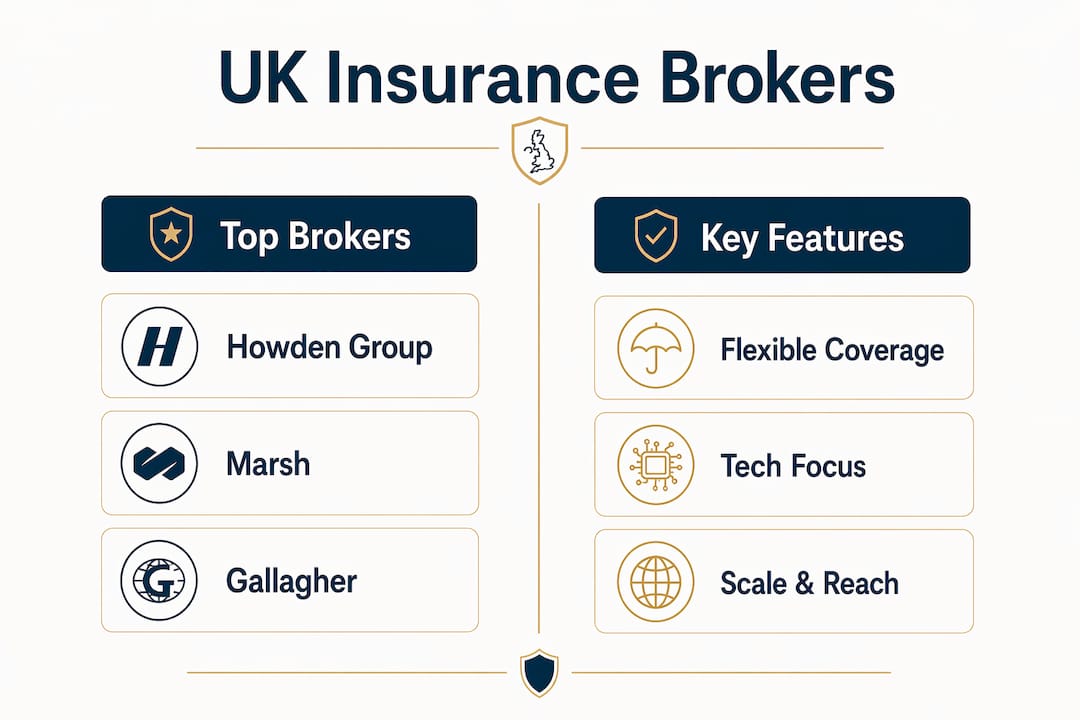
- Howden Group — best for tech scale-ups needing end-to-end UK and global cover
- Marsh — best for VC-backed startups requiring risk advisory alongside placement
- Arthur J. Gallagher — best for flexible, scalable Tech E&O and cyber programmes
- The Ardonagh Group — best for emerging technology and AI-specific risk coverage
- WTW (Willis Towers Watson) — best for large startups with complex, multi-territory needs
- Chubb — best for tech companies wanting modular, dynamically allocated cover
- Hiscox — best for professional service startups needing IP and media liability depth
- Vouch — best for SaaS and software startups wanting quick, customisable digital policies
- Next Insurance — best for early-stage founders wanting affordable, self-serve cover
- The Hartford — best for startups combining liability and property in a single policy
- Progressive — best for startups seeking competitive pricing with flexible policy design
Every one of these providers is available to UK-based businesses. The right choice depends on your revenue stage, your customer contracts, and whether your investors have already specified coverage requirements.
Essential insurance policies every UK high-growth startup must have
The insurance options for startups that genuinely matter are not the ones that look cheapest at renewal. They are the ones that keep you fundable, contractually compliant, and operationally protected when something goes wrong.
Tech E&O and Professional Indemnity
Tech Errors & Omissions is the core policy for any technology business. It responds to claims of negligent service delivery, software defects, AI model errors, integration failures, and SLA breaches. Standard Professional Indemnity policies were not designed for these exposures. A generic PI policy will not cover foundational model dependency, hallucination liability, or SaaS contractual indemnity scope. If you build or sell software, you need Tech E&O with explicit AI scope written into the wording.
Cyber and Data Liability
Cyber cover addresses data breaches, ransomware, ICO investigation defence, and third-party data claims. Clients increasingly require evidence of cover before onboarding new tech suppliers. Running without it does not just expose you financially. It can cost you contracts before they start.

Directors & Officers (D&O)
D&O protects founders and board members personally against claims arising from management decisions. For VC-backed startups, this is not optional. Investors expect it, and it is frequently a condition of funding release.
Intellectual Property Defence
IP insurance covers the cost of defending or pursuing IP disputes, including patent infringement claims. For startups whose core asset is proprietary technology or a brand, this cover can be the difference between surviving a dispute and being forced to settle on unfavourable terms.
Emerging tech-specific covers
AI startups, SaaS vendors, and automation businesses face exposures that did not exist five years ago. Specialist UK brokers now offer policies addressing:
- AI hallucination liability and bias claims
- Foundational model dependency risk
- EU AI Act regulatory defence (mandatory for high-risk AI from august 2026)
- ICO automated decision-making obligations under the Data (Use and Access) Act 2025
- SaaS contractual indemnity scope beyond standard PI limits
Generic policies do not cover these. Specialist AI and tech cover from Lloyd’s-market syndicates is the only route to adequate protection for businesses operating in this space.
How do the leading UK insurance providers compare?
The UK’s top 10 insurance brokers by revenue in 2025 collectively exceeded £13bn, with Howden Group leading the pack ahead of Marsh, Arthur J. Gallagher, The Ardonagh Group, and WTW. Scale matters here, but so does specialisation.
| Provider | Best for | Coverage types included | Special features | Provider reputation |
|---|---|---|---|---|
| Howden Group | Tech scale-ups, full growth cycle | Tech E&O, Cyber, D&O, PI, run-off, IPO cover | Covers startup to exit; global reach | #1 UK broker by revenue 2025 |
| Marsh | VC-backed startups, risk advisory | PI, Cyber, D&O, international liability | Strong VC investor relations | #2 UK broker by revenue 2025 |
| Arthur J. Gallagher | Flexible, scalable programmes | Tech E&O, Cyber, PI, D&O | Expertise in tech sector placement | #3 UK broker by revenue 2025 |
| The Ardonagh Group | AI and emerging tech scale-ups | AI risk, Tech E&O, Cyber, bespoke packages | Focus on AI and automation risk | #4 UK broker by revenue 2025 |
| WTW (Willis Towers Watson) | Large startups, multi-territory | PI, Cyber, D&O, global liability | Analytics-driven risk management | #5 UK broker by revenue 2025 |
| Chubb | Tech companies, modular cover | Tech E&O, Cyber, PI, MasterPackage extensions | £500,000 allocable across extensions | Specialist tech insurer |
| The Hartford | Combined liability and property | Business Owner’s Policy, liability, property | Strong bundling options | Growing UK presence |
| Next Insurance | Early-stage, self-serve founders | General liability, PI, Cyber | Digital-first, rapid online quotes | Digital insurer, US-founded |
| Vouch | SaaS and software startups | Tech E&O, Cyber, D&O, PI | Specialist SaaS and software delivery | Startup-focused digital insurer |
| Hiscox | Professional service startups | PI, Cyber, IP, media liability | Depth in IP and professional indemnity | Established specialist insurer |
| Progressive | Liability and tech cover | General liability, tech insurance | Competitive pricing, flexible design | US insurer expanding to UK |
Howden Group and Marsh
Howden Group’s position as the UK’s largest broker by income reflects genuine scale, but what sets it apart for startups is its commitment to covering the entire growth cycle, from pre-revenue to IPO and exit. Howden’s tech team understands that most claims against startups concern breaches of contract, and it structures its advisory accordingly. Marsh brings a different strength: its relationships with VC firms and its risk advisory capability make it the natural choice for founders who need their insurer to speak fluently to their investors.
Arthur J. Gallagher and The Ardonagh Group
Gallagher’s strength lies in building flexible programmes that scale with revenue without requiring a full policy rebuild at each funding round. The Ardonagh Group has moved decisively into AI and emerging technology risk, making it one of the few brokers with genuine expertise in the exposures that matter most to founders building on large language models or automation platforms.

Chubb’s MasterPackage
Chubb’s MasterPackage for tech entrepreneurs includes £500,000 that can be allocated dynamically across cover extensions at the time of a loss. That flexibility is genuinely useful for startups whose risk profile shifts quickly. Rather than being locked into fixed sub-limits, you can direct funds where the actual claim demands.
Hiscox and Vouch
Hiscox has built a strong reputation in professional indemnity and media liability, making it particularly well suited to startups in legal tech, media, or professional services where IP disputes are a real operational risk. Vouch takes a different approach entirely, operating as a digital-first insurer built specifically for the startup ecosystem, with policies that address SaaS delivery risks and software liability in plain language.
Next Insurance, The Hartford, and Progressive
Next Insurance suits founders at the earliest stage who need cover quickly and affordably without broker intermediation. The Hartford’s bundled business owner’s policies work well for startups that need property and liability combined in a single, manageable contract. Progressive’s competitive pricing and flexible design make it worth considering for startups that want comprehensive liability and tech cover without paying for features they do not yet need.
How do you choose the right insurance for your UK startup?
Choosing cover is not about finding the cheapest policy. It is about matching your limits to your actual exposure, satisfying your investors, and making sure your policy wording covers the risks your business actually runs.
Follow these steps:
- Map your contractual liability caps. The largest liability cap you have accepted in a customer contract sets the floor for your Tech E&O limit. If you have accepted unlimited liability with a client, your insurance limit does not cap your exposure. Liability limits must match or exceed the maximum contractual cap you have signed.
- Identify your regulatory obligations. If you process personal data, you need Cyber cover with ICO investigation defence. If you deploy high-risk AI, you need EU AI Act regulatory defence scope from august 2026.
- Check your investor requirements. VC firms and accelerators frequently mandate PI, Cyber, and D&O as conditions of funding. Confirm what your term sheet or shareholder agreement requires before you buy.
- Choose a broker who understands your sector. A generalist broker placing a standard PI policy for a SaaS company is not the same as a specialist placing Tech E&O with AI scope. The wording difference can determine whether a claim pays.
- Build in flexibility. Your revenue will grow. Your customer base will change. Choose a provider or policy structure that allows limit increases and cover additions without full re-underwriting at each stage.
- Integrate insurance with your growth planning. Insurance is not a one-off purchase. Treat it as part of your venture capital and investor advisory process, reviewed at each funding round and whenever you enter a new market or customer segment.
Pro Tip: When you negotiate a new enterprise contract, send the liability clause to your broker before you sign. A mismatch between your contractual cap and your policy limit is one of the most common and most avoidable sources of uncovered exposure for fast-growing startups.
What do experts say about the UK startup insurance market?
The UK startup insurance market has matured considerably, but the gap between what generic policies cover and what tech startups actually need remains wide. Founders who treat insurance as a compliance checkbox rather than a risk management tool tend to discover that gap at the worst possible moment.
The UK brokerage market is consolidating rapidly, with aggregate revenue across the top 10 brokers exceeding £13bn in 2025. That scale brings resources, but it also means founders need to be specific about what they need. A large broker’s default startup package may not include AI scope, EU AI Act regulatory defence, or the contractual indemnity wording your enterprise clients require.
The EU AI Act’s high-risk provisions take effect from 2 august 2026. Any UK startup deploying AI in a high-risk category, including healthcare, legal, financial services, or employment decisions, needs regulatory defence scope written explicitly into its Tech E&O policy before that date. Most standard policies do not include it.
For founders working with specialist advisors on entrepreneur strategy, the consistent message is the same: insurance limits must be set by your contractual exposure, not by what feels affordable. A £1m Tech E&O limit is inadequate if your largest client contract carries a £5m liability cap.
What does startup insurance actually cost in the UK?
Premiums scale with revenue, sector, and the scope of AI risk you carry. The figures below are indicative 2026 annual premiums for startups with £100,000–£500,000 in annual revenue:
- AI startups: £2,200–£5,500
- B2B SaaS vendors: £3,500–£8,500
- FinTech, HealthTech, and LegalTech: £6,500–£16,000 (high-risk loading applies)
- AI and tech consultancies: £1,500–£4,200
- DevOps and managed services: £3,200–£7,800
- Marketplaces and platforms: £4,500–£11,000
At £10m ARR, a FinTech might pay £35,000–£90,000 across its full programme. A platform at £50m ARR or above can expect £55,000–£100,000 or more. Revenue is the primary driver, but it is not the only one.
The main cost drivers are:
- Revenue and the liability caps in your customer contracts
- AI scope and risk classification (hallucination, bias, foundational model dependency)
- Geographic exposure (US and EU markets carry higher litigation defence costs)
- Customer industries (financial services, healthcare, and legal attract high-risk loadings)
- Claims history and cyber maturity
You can reduce premiums meaningfully by achieving cyber certifications such as Cyber Essentials Plus, ISO 27001, and SOC 2 Type II. These demonstrate risk maturity to underwriters and directly lower the cost of cyber cover. Documented AI governance frameworks, vendor contract indemnity reviews, and maintaining continuity with the same insurer for three or more years also reduce premiums. Do not treat these as separate tasks. Stack them.
One cost trap founders consistently walk into is accepting unlimited liability in customer contracts. Your insurance limit does not cap that exposure. Discipline on contractual liability caps is one of the most effective premium levers available, and it costs nothing except a firm negotiating position.
NXD Family Office: a different kind of insurance advisory
The providers compared above are insurers and brokers. They place policies. NXD Family Office operates differently, as an independent advisory practice that sits on your side of the table, free from referral fees and commissions, connecting you with the right specialists for your specific situation.
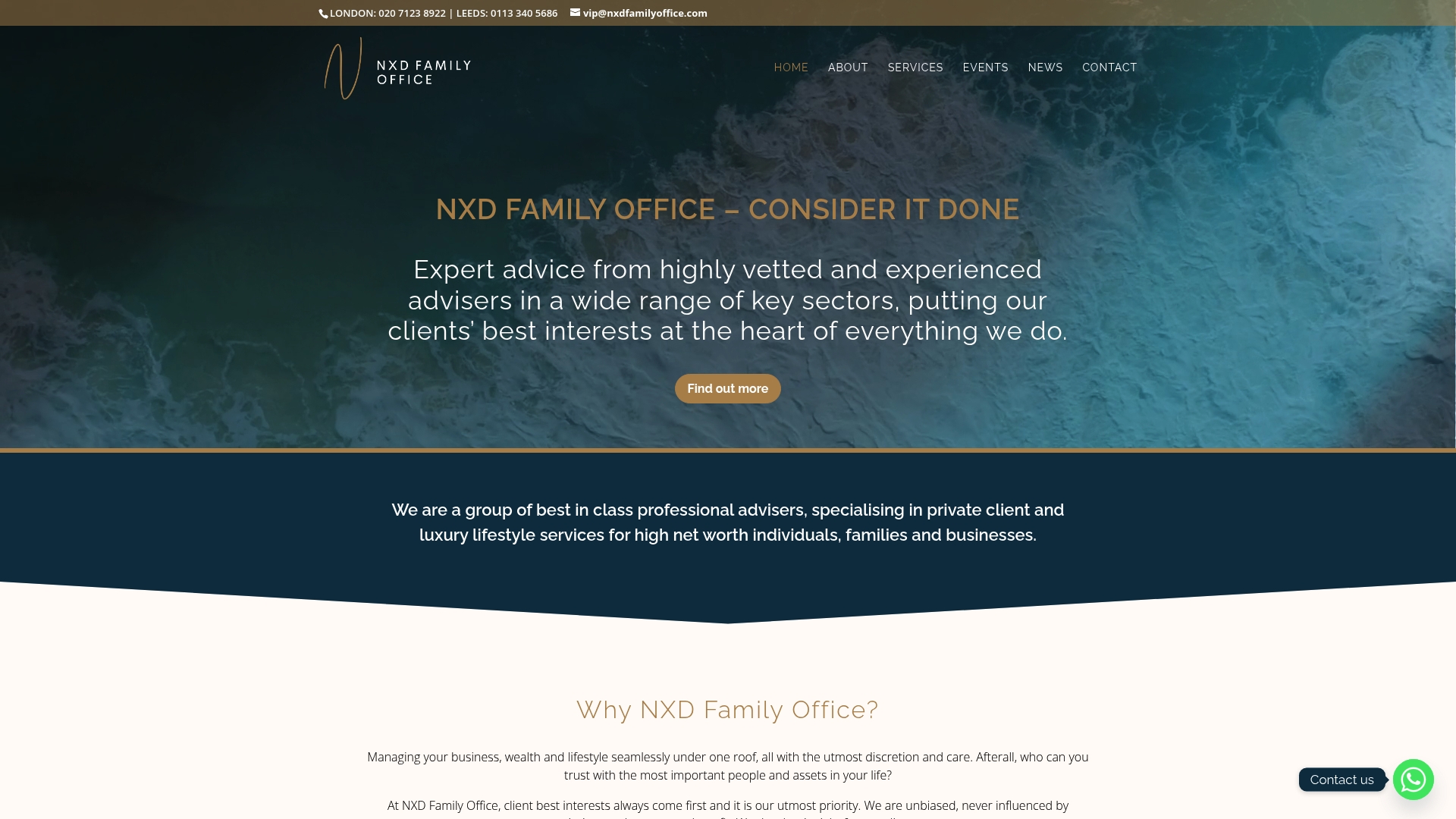
For high-growth entrepreneurs who want bespoke insurance and wealth advisory without the conflict of interest that comes with commission-driven broking, NXD Family Office offers a genuinely different route. The focus is on your interests, not on which insurer pays the highest placement fee. If you are navigating a funding round, entering a new market, or simply unsure whether your current cover matches your actual contractual exposure, that independence matters.
NXD Family Office’s wealth management services extend across financial planning, insurance advisory, and lifestyle management, giving founders a single point of contact for decisions that span personal and business risk. Consider it done.
FAQ
Who are the top UK insurance brokers for startups?
The UK’s top brokers by revenue in 2025 are Howden Group, Marsh, Arthur J. Gallagher, The Ardonagh Group, and WTW, with aggregate revenue across the top 10 exceeding £13bn. For tech startups specifically, Howden Group, Hiscox, and Vouch are among the most frequently recommended.
What is the best business insurance for a UK startup?
The core package for most UK tech startups is Tech E&O, Cyber Liability, and Professional Indemnity, with D&O added once you have investors or a board. The exact limits should match the liability caps in your largest customer contracts.
Do investors require startups to have insurance?
Yes. VC firms and accelerators frequently mandate Professional Indemnity, Cyber, and D&O cover as part of due diligence before releasing funds. Confirm your specific requirements with your lead investor before your funding round closes.
What are the big four insurance brokers in the UK?
The four largest UK insurance brokers by revenue are Howden Group, Marsh, Arthur J. Gallagher, and The Ardonagh Group, followed closely by WTW. All five operate globally and have dedicated technology and startup practices.
Key takeaways
The strongest insurance programmes for high-growth UK startups combine Tech E&O, Cyber Liability, and D&O as a minimum, with limits set by contractual exposure rather than budget comfort.
| Point | Details |
|---|---|
| Core policies are non-negotiable | Tech E&O, Cyber Liability, PI, and D&O form the essential package for any VC-backed UK startup. |
| Limits must match contracts | Your Tech E&O limit should equal or exceed the largest liability cap you have accepted in a customer contract. |
| AI scope must be explicit | Generic PI policies do not cover AI hallucination, foundational model dependency, or EU AI Act regulatory defence. |
| Certifications cut premiums | Cyber Essentials Plus, ISO 27001, and SOC 2 Type II directly reduce cyber insurance costs for SaaS businesses. |
| NXD Family Office | Offers commission-free insurance advisory for entrepreneurs who want independent guidance across personal and business risk. |