

What wealth preservation actually means for you
Wealth preservation is the practice of protecting the capital you have already built, keeping its real value intact against inflation, tax erosion, and market shocks. It is a fundamentally different discipline from wealth accumulation. Where accumulation asks “how do I grow this?”, preservation asks “how do I keep what I have?”
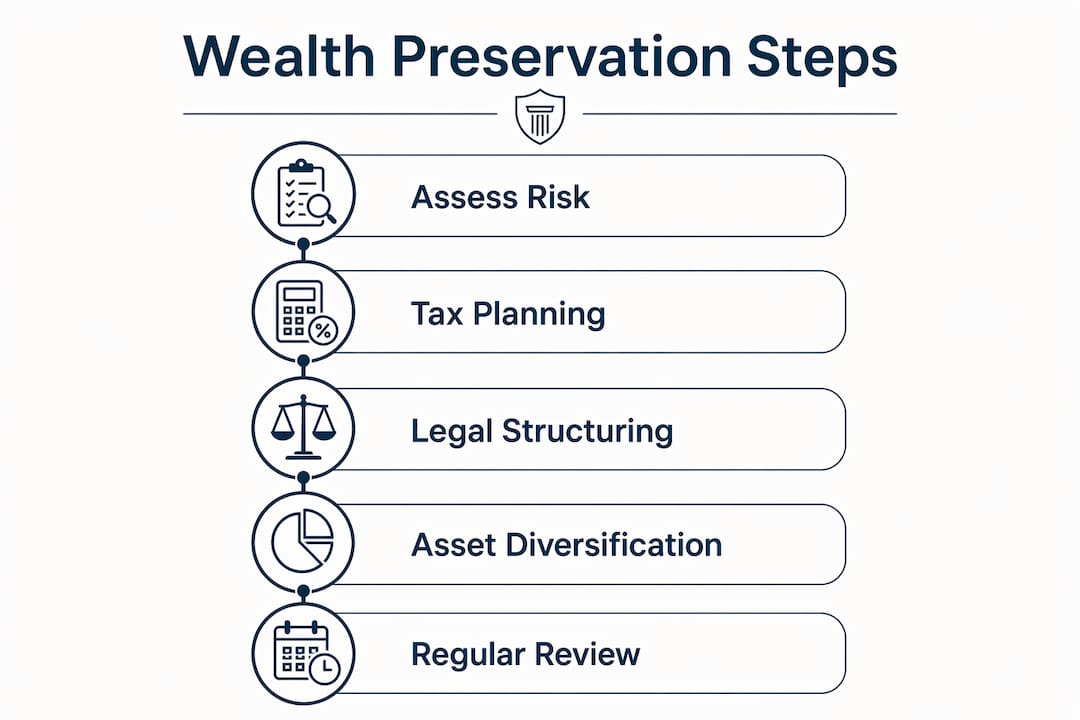
The core components are:
- Risk management: identifying and limiting exposure to market, longevity, and legislative risks
- Diversification: spreading assets across equities, bonds, real estate, and alternatives so no single loss is catastrophic
- Tax efficiency: using wrappers such as ISAs and SIPPs to shield returns from unnecessary tax drag
- Liquidity planning: maintaining accessible reserves so you are never forced to sell long-term assets at the wrong moment
- Longevity planning: accounting for the real cost of living well into your eighties or nineties, including care
The FCA’s Consumer Duty framework requires advisers to assess each client’s risk appetite and financial capacity carefully, ensuring portfolios are genuinely suited to the individual rather than a generic template. That regulatory standard matters because it sets the floor for what good advice looks like. Firms such as NXD Family Office operate within this framework, providing unbiased guidance free from referral fees or commissions.
Table of Contents
- What quietly erodes your wealth over time
- Core strategies for protecting your assets
- How to plan wealth transfer for future generations
- Expert perspectives on wealth preservation in 2026
- How NXD Family Office supports your wealth preservation goals
- Key takeaways
- FAQ
What quietly erodes your wealth over time
Understanding wealth preservation basics starts with knowing what you are defending against. The threats are rarely dramatic. They compound quietly.
- Inflation: even modest inflation steadily reduces the real purchasing power of cash and nominal bonds held over a long retirement. Inflation-protected assets such as equities, real estate, and index-linked gilts are considered essential in any preservation portfolio for this reason.
- Sequence-of-returns risk: a sharp market fall early in retirement drawdown can permanently impair a portfolio, even if markets recover fully afterwards. The order of returns matters as much as the average return.
- Inheritance tax: UK inheritance tax is levied at 40% on the portion of an estate exceeding the standard nil-rate band of £325,000, with this threshold remaining unchanged until at least 2029/30. Rising property values mean more estates are crossing that threshold than ever before.
- Longevity and care costs: living longer is a financial risk as much as a personal one. Late-life care costs can run to tens of thousands of pounds annually and are rarely fully covered by state provision.
- Fraud and poor decisions: financial exploitation and emotionally driven investment choices remain significant, if underreported, causes of wealth erosion.
Core strategies for protecting your assets
The shift from growth to preservation in 2026 centres on a set of well-established techniques, applied with discipline and reviewed regularly.
- Diversification across asset classes: a portfolio spanning equities, government and corporate bonds, residential and commercial property, and alternative investments such as infrastructure or commodities is far more resilient than one concentrated in a single class.
- The bucket approach to drawdown: allocating assets across three time horizons, cash for one to three years of spending, bonds for three to ten years, and equities for the long term, prevents forced sales during market downturns and reduces psychological pressure on investors.
- Tax-efficient wrappers: ISAs shelter up to £20,000 per year from income tax and capital gains tax. SIPPs offer upfront tax relief on contributions and tax-free growth. Pension drawdown planning, structured carefully, can significantly reduce the tax burden on retirement income.
- Protection products: life insurance and long-term care insurance transfer specific financial risks to an insurer, protecting the estate from sudden large outflows.
- Annuities blended with drawdown: inflation-linked annuities provide a guaranteed income floor, removing longevity risk from at least a portion of the portfolio. Blending an annuity with flexible drawdown gives both security and adaptability.
- Trusts and gifting: placing assets in trust removes them from the taxable estate over time and can protect beneficiaries from their own financial inexperience or from divorce proceedings. Lifetime gifts made more than seven years before death fall outside the estate entirely.
- Regular rebalancing: a portfolio left unreviewed drifts from its intended risk profile. Scheduled reviews, at least annually, keep asset allocation aligned with both market conditions and the client’s evolving circumstances.
Pro Tip: Reducing taxes for professional service clients often requires the same layered approach used in personal wealth preservation. Combining pension contributions, ISA allowances, and trust structures can meaningfully reduce both income tax and eventual IHT exposure. A specialist accountant can help identify which combinations apply to your situation.

How to plan wealth transfer for future generations
Passing wealth efficiently to the next generation requires legal preparation, not just financial planning. The two are inseparable.
- Wills and Powers of Attorney: a legally binding Will is the foundation. Without one, intestacy rules distribute your estate according to statute, not your wishes. A Lasting Power of Attorney ensures someone you trust can manage your finances if you lose capacity, a risk that increases significantly with age.
- Digital estate readiness: organising legal documents, financial accounts, and digital access in a single, secure location reduces the administrative chaos that follows a death and helps executors act quickly. Platforms designed for this purpose allow field-level sharing so a solicitor sees what they need without accessing personal correspondence.
- Trusts for tax-efficient transfer: discretionary trusts and bare trusts can remove assets from the estate progressively, protect beneficiaries, and give trustees control over timing and conditions of distributions.
- Additional Permitted Subscription: since April 2015, a surviving spouse or civil partner can inherit an ISA allowance equal to the value of the deceased’s holdings through the Additional Permitted Subscription mechanism. This preserves the tax-efficient status of those savings without reducing the survivor’s own £20,000 annual allowance.
- IHT relief on qualifying shares: from April 2026, inheritance tax relief on qualifying shares is capped at 100% for the first £1 million and 50% thereafter. Careful portfolio sizing is now necessary to maximise the available relief without inadvertently reducing it.
- Business valuation in estate planning: for business owners, accurate business valuation is a prerequisite for effective estate planning. Misjudging the value of a business interest can result in an unexpected IHT liability or an inefficient transfer structure.
- Early family conversations: delaying discussions about wealth transfer limits planning options and increases the risk of disputes. Starting early, with professional facilitation if needed, allows the family to align on values and expectations before decisions become urgent.
Expert perspectives on wealth preservation in 2026
Practitioners working with high-net-worth clients in the UK consistently highlight a few themes that go beyond the technical mechanics.
- The mindset shift is the hardest part. The psychological barrier to moving from accumulation to preservation is real and often causes late-stage losses. Investors who delay the transition tend to carry more risk than their circumstances warrant, sometimes discovering this only after a significant market event.
- Suitability assessments must be ongoing. Under FCA Consumer Duty, wealth managers are required to maintain live, updated client data and review portfolio suitability regularly. A static risk profile from five years ago is not a compliant basis for today’s recommendations.
- APS is underused. Many surviving spouses are unaware that they can inherit their partner’s ISA tax advantages through the Additional Permitted Subscription without touching their own annual allowance. This is one of the most straightforward intergenerational tax benefits available under current UK rules.
- The new IHT relief cap demands active portfolio management. The April 2026 cap on qualifying share relief at £1 million at 100% and 50% thereafter means that estates holding significant shareholdings need to review their composition now, not at the point of death.
- Combining annuities with drawdown works. Blending a guaranteed income floor from an inflation-linked annuity with flexible pension drawdown addresses both longevity risk and the desire for portfolio flexibility. Neither product alone is as effective as the combination.
NXD Family Office brings together expert advisers across financial planning, legal structuring, insurance, and asset management, providing the kind of coordinated oversight that these interconnected decisions require.
Pro Tip: Ask your adviser to run a formal suitability audit at least once a year, not just when you initiate a change. Under FCA Consumer Duty, they are expected to do this proactively. If they are not, that is worth noting.

How NXD Family Office supports your wealth preservation goals

Most traditional advisory firms are built around product sales. The advice follows the product. NXD Family Office is built the other way around: the client’s interests come first, with no referral fees or commissions distorting the guidance.
For individuals and families seeking to protect and sustain their assets, that distinction is significant. Wealth preservation requires coordinated decisions across tax planning, legal structuring, insurance, investment allocation, and estate readiness. When each of those is handled by a separate firm with its own commercial interests, the gaps between them are where value is lost.
NXD Family Office provides a single, trusted network of vetted specialists across all of these disciplines, from wealth management services and private structuring through to estate and business exit planning. Clients receive bespoke solutions aligned to their actual situation, not a packaged product. To discuss how a coordinated preservation strategy could work for your circumstances, contact NXD Family Office directly.
Key takeaways
Effective wealth preservation in the UK requires a coordinated strategy across risk management, tax efficiency, legal structuring, and intergenerational planning, reviewed regularly against FCA suitability standards.
| Point | Details |
|---|---|
| Preservation differs from accumulation | The goal shifts from growing capital to protecting its real value against inflation, tax, and longevity risk. |
| IHT relief cap from April 2026 | Qualifying share relief is capped at 100% for the first £1 million and 50% on sums above that threshold, requiring careful portfolio sizing. |
| ISA benefits can transfer on death | The Additional Permitted Subscription allows a surviving spouse to inherit a partner’s ISA allowance without reducing their own annual limit. |
| Mindset shift is the critical first step | Delaying the move from growth to preservation mindset tends to leave portfolios carrying more risk than circumstances warrant. |
| NXD Family Office | Provides commission-free, coordinated advice across financial, legal, and estate planning disciplines for high-net-worth clients. |
FAQ
What are the best wealth preservation strategies in the UK?
Diversification across asset classes, tax-efficient wrappers such as ISAs and SIPPs, trust structures for IHT mitigation, and inflation-linked annuities blended with pension drawdown are the most widely used and effective approaches for UK investors in 2026.
What is the Additional Permitted Subscription and why does it matter?
The Additional Permitted Subscription allows a surviving spouse or civil partner to inherit the deceased’s ISA allowance on top of their own £20,000 annual limit, preserving the tax-efficient status of those savings across generations.
How does the April 2026 IHT relief cap affect estate planning?
From April 2026, inheritance tax relief on qualifying shares is capped at 100% for the first £1 million and 50% for holdings over that amount, prompting estates with substantial shareholdings to actively review and size portfolios for optimal tax efficiency.
What creates the most wealth erosion over time?
Inflation, sequence-of-returns risk during drawdown, inheritance tax on estates above the £325,000 nil-rate band, and late-life care costs are the primary forces that erode wealth, particularly when no structured preservation plan is in place.
When should you shift from wealth accumulation to preservation?
The transition should begin well before retirement, ideally as part of a formal suitability review with a qualified adviser. Waiting until after a significant market loss to make the shift typically results in a worse outcome than a proactive, planned transition.